 Japan Rail Pass NowAustralia's No.1 Choice
1300 635 500Mon-Fri, AEST
Buy Now
Japan Rail Pass NowAustralia's No.1 Choice
Tokyo to Osaka is the busiest intercity corridor in Japan, and the Tokaido Shinkansen makes it a breeze. The fastest Nozomi covers the roughly 515 kilometres in about two and a half hours, city centre to city centre, which is why most travellers skip the plane entirely. Here is how every option compares, what a ticket costs, and how to book from Australia in AUD.
Check live Tokyo to Osaka fares and book →

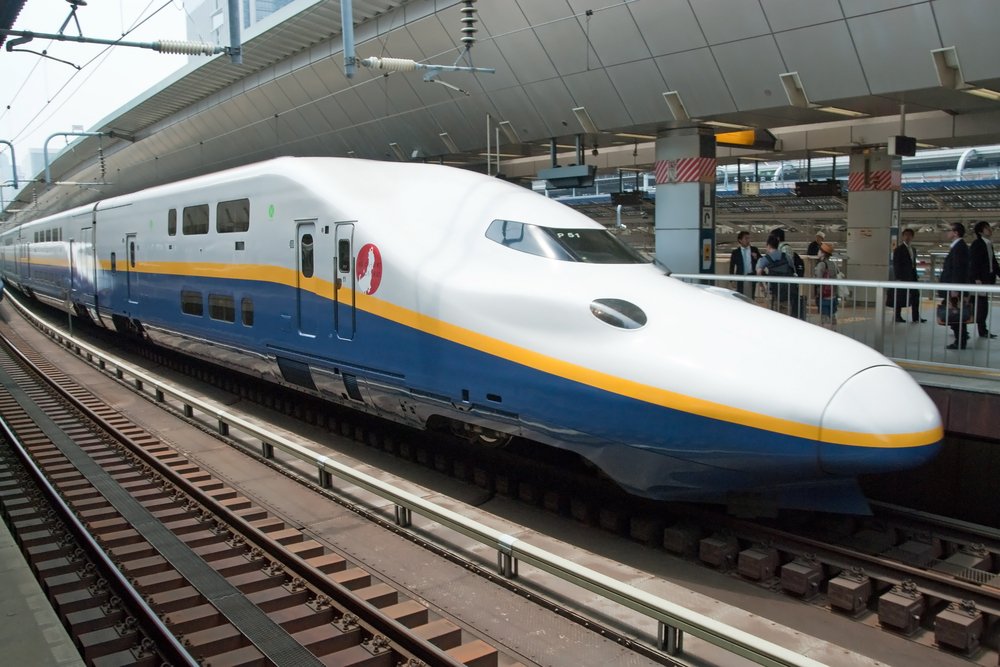
The Tokaido Shinkansen runs between Tokyo Station and Shin Osaka up to a dozen times an hour at peak times. Trains leave Tokyo and Shinagawa, then arrive at Shin Osaka, which links to central Osaka in a few minutes on the local Midosuji subway or a short shinkansen hop to Kyoto. It is fast, punctual to the minute, and far more comfortable than flying once you count airport time.
| Option | Time | From (one way) | Good for |
|---|---|---|---|
| Shinkansen (Nozomi) | about 2h 27m | from AUD 123 | Fastest and easiest, city to city |
| Plane (HND to ITM) | 1h 15m in the air | from AUD 90 | Only faster if you live near the airport |
| Highway bus | 8 to 9 hours | from AUD 40 | Overnight trips on a tight budget |
| Car | about 6 hours | fuel plus tolls | Side trips and rural stops |
Three trains run the line. The Nozomi is the fastest at about 2 hours 27 minutes and runs most frequently. The Hikari takes closer to 3 hours with a few extra stops and is fully covered by the Japan Rail Pass. The all stations Kodama is slowest at around 4 hours. For most visitors the Nozomi is the obvious pick unless you are travelling on a pass.
Reserving is not compulsory, since every Nozomi and Hikari has non reserved cars you can walk onto. In practice a reserved seat is worth it in peak season, when trains can be standing room only. Cherry blossom in early April, the autumn leaves in November and the Golden Week and New Year holidays are the times to book ahead.
The first Nozomi leaves Tokyo around 06:00 and the last departure is close to 21:24, so you have a very wide window. Services thin out late in the evening, so if you are aiming for a night arrival, check the timetable for your date rather than assuming a train will be waiting.
Heading from Tokyo to Osaka, Mount Fuji appears on the right hand side about 40 to 45 minutes in. Choose window seats D or E for the clearest view on a fine day. On the return leg it is on the left.
You can reserve online in advance, pay in Australian dollars with no card surprises, and board with a QR code. This avoids queues at the ticket machines and locks in a seat together if you are travelling as a group. Collect at the station if a paper ticket is needed for your service.
See today’s Tokyo to Osaka trains →
The Japan Rail Pass covers the Hikari and Kodama on this line, but not the faster Nozomi unless you pay a limited express supplement. If you are making several long trips, for example Tokyo, Osaka, Hiroshima and back, the nationwide pass can pay off. For a single Tokyo to Osaka run, a point to point ticket is usually cheaper. Our calculator does the maths for you.
If you land at Haneda or Narita and Osaka is your first stop, you do not need to sightsee in Tokyo first. Ride into Tokyo Station or Shinagawa on the airport line, then step straight onto the Tokaido Shinkansen. Many travellers do exactly this to start their trip in Kansai.
Overnight highway buses are the budget choice, leaving Tokyo in the evening and reaching Osaka around dawn for as little as AUD 40. They take 8 to 9 hours and save you a night of accommodation, but you arrive tired and the schedule is far less flexible than the train. Reclining three across seats cost a little more and are worth it for a longer sleep.
Flights between Haneda and Osaka Itami or Kansai take about 75 minutes in the air and can look cheap on paper. Once you add getting to the airport, security, boarding and the trip from the arrival airport into the city, the shinkansen usually wins on total time for a centre to centre journey. Flying makes more sense if your hotel is already near an airport.
Driving takes around 6 hours on the Tomei and Meishin expressways, plus tolls that add up quickly. A car only makes sense if you plan to explore Hakone, Nagoya or rural stops on the way. In the cities themselves, parking is costly and the trains are faster.
Two bags per person, each up to 30 kilograms, travel free on the overhead racks or behind the last row of seats. Oversized bags with total dimensions over 160 centimetres need a reserved seat with an oversized baggage space, which is free if you book it in advance. Suitcases up to normal check in size are fine without any special booking.
For almost everyone, the Nozomi shinkansen is the best way from Tokyo to Osaka. It is fast, frequent, comfortable and drops you in the heart of the city. Take the overnight bus only if budget is the priority, and consider flying only if you are starting or ending near an airport. On a multi city trip, check whether a rail pass beats individual tickets.
Planning more of Japan by rail? Keep exploring:
Tokyo to Kyoto · Osaka to Hiroshima · Osaka to Kyoto · All train tickets
Fares are indicative from prices in Australian dollars and vary by date, train and season. The live fare is shown when you search. Booking is handled by our travel partner and we may earn a commission, which never changes your price.

Ensure you get the most out of your trip to the land of the rising sun with our comprehensive 249-page Japan Travel Guide.