 Japan Rail Pass NowAustralia's No.1 Choice
1300 635 500Mon-Fri, AEST
Buy Now
Japan Rail Pass NowAustralia's No.1 Choice
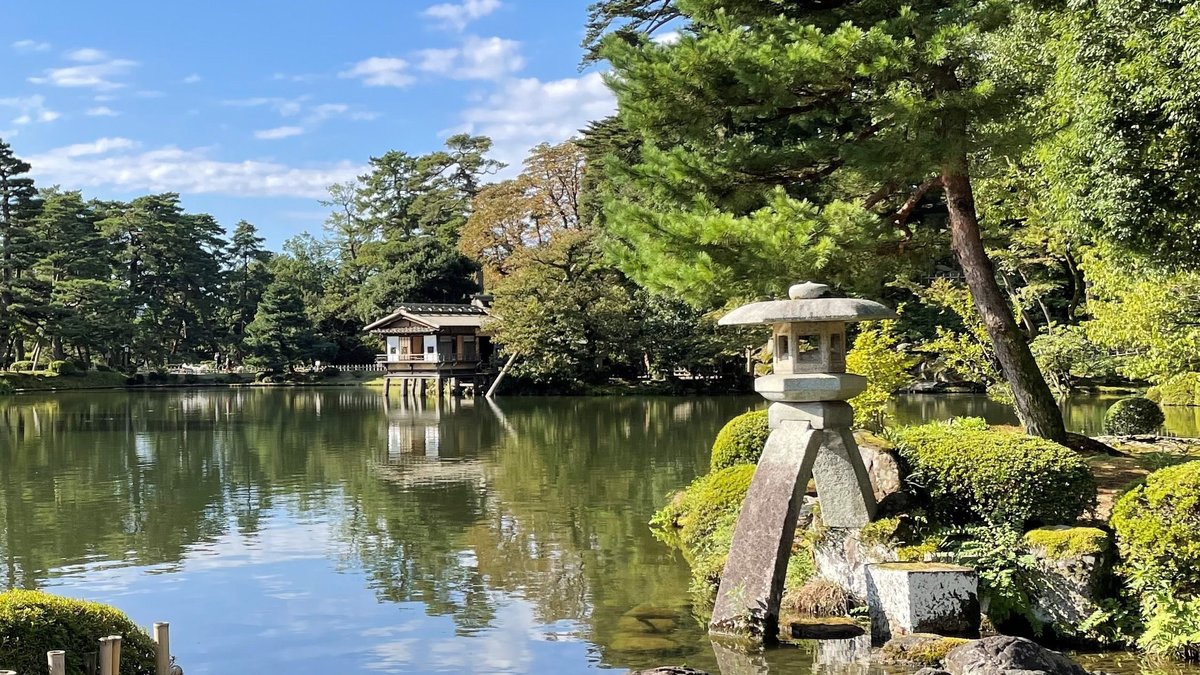
Kenrokuen is routinely named the finest landscape garden in Japan, the centuries long project of the Maeda lords whose wealth built Kanazawa. Its name refers to the six attributes of the perfect garden, spaciousness and seclusion, artifice and antiquity, waterways and views, and the achievement of all six at once is exactly what generations of gardeners here pulled off.
The garden folds ponds, streams, bridges and teahouses into a strolling landscape where every turn is composed: the two legged Kotoji lantern poised at the water’s edge, the great Karasaki pine trained out over the pond, the fountain running on natural pressure since the Edo period. In winter the famous yukitsuri ropes rise in cones over the pines to shield them from wet snow, a sight that has become Kanazawa’s emblem. Every season redraws the garden, from plum and cherry through iris to snowbound silence.
Come at opening if you can; the garden in early light, before the tour groups, is a different place. Kanazawa Castle faces the garden across a bridge, and the Seisonkaku villa, the 21st Century Museum of Contemporary Art and the Higashi Chaya teahouse district all sit within a short walk or bus hop, making a full and rich day on foot.
From Kanazawa Station, JR and Hokutetsu buses reach the Kenrokuen-shita stops in about 15 minutes, followed by a short climb to the gates. Kanazawa is on the Hokuriku Shinkansen, around two and a half hours from Tokyo.
Which season is best? Impossible to answer; winter yukitsuri and April cherries are the icons, autumn the connoisseur’s pick.
How long does it need? Ninety minutes minimum, longer with tea at a pondside teahouse.
We may earn a commission when you book through links on this page, at no extra cost to you. Details and inclusions can change, so always check the booking page for the latest.

Ensure you get the most out of your trip to the land of the rising sun with our comprehensive 249-page Japan Travel Guide.