 Japan Rail Pass NowAustralia's No.1 Choice
1300 635 500Mon-Fri, AEST
Buy Now
Japan Rail Pass NowAustralia's No.1 Choice
Osaka is the counterweight to Kyoto. Where Kyoto is restrained and historic, Osaka is loud, direct and built around eating. Locals have a word for it, kuidaore, which translates roughly as eating yourself into ruin, and they use it about their own city with some pride. It is Japan’s second largest metropolitan area and the one where visitors most often say people actually talked to them.
It is also the most practical base in Kansai. Kyoto, Nara, Kobe and Himeji are all inside an hour, the airport connection is quick, and accommodation costs less than Kyoto for the same standard. A lot of people end up seeing more of the region by sleeping here.
The pattern follows the rest of central Japan. Spring and autumn are mild and pleasant, summer is hot and humid, winter is cold but dry and quiet. Osaka sits at sea level on a bay, so summer is marginally less oppressive than Kyoto in its mountain basin, though not by much.
Cherry blossom arrives in late March and early April. Osaka Castle park has around 600 cherry trees and is one of the better viewing spots in the country, and the riverside at Sakuranomiya is a long avenue of them that locals favour over the castle grounds.
| Season | What it is like | Worth knowing |
|---|---|---|
| Spring March to May |
Mild, with blossom in late March and early April | Castle park and Sakuranomiya are the viewing spots. Golden Week in late April is very busy |
| Summer June to August |
Hot and humid, rainy season through June | Tenjin Matsuri in late July is one of Japan’s three great festivals |
| Autumn September to November |
Comfortable, colour through November | The best all round time to come, and quieter than Kyoto |
| Winter December to February |
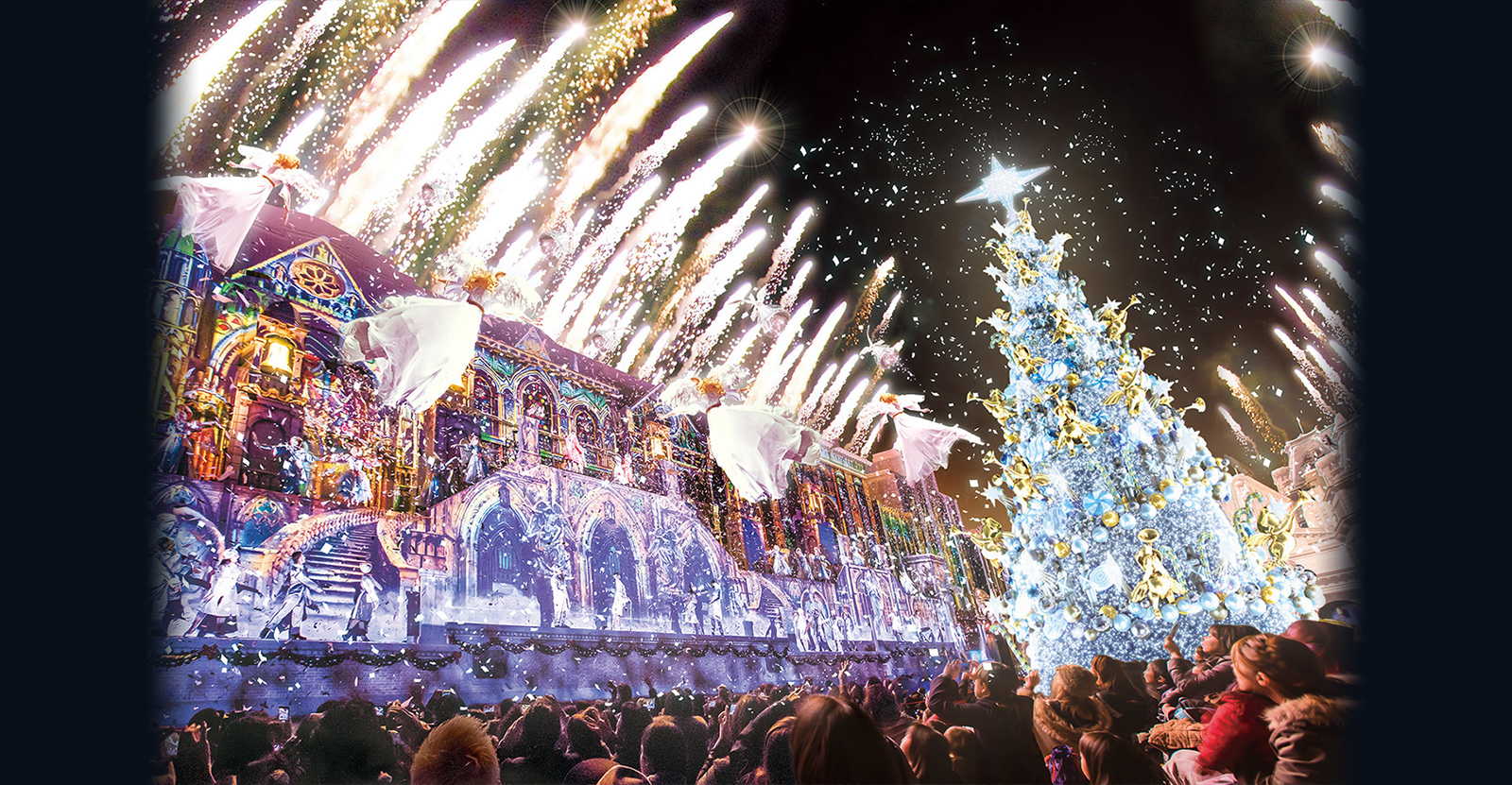
Cold and dry, rarely snowy | Low season. Illuminations run through December across the city |

Osaka is far easier to navigate than Kyoto. The Osaka Metro covers the city properly, with the Midosuji line running north to south through every district you are likely to want, from Umeda down through Namba and on to Tennoji. The JR Osaka Loop Line circles the centre in much the way the Yamanote does in Tokyo.
An IC card handles all of it. The Metro and JR are run by different operators, but an IC card works across both, so most visitors tap on and off without thinking about which company runs what.
From Kansai Airport, the Nankai Rapi:t reaches Namba in about 35 minutes and the JR Haruka runs to Tennoji and Shin-Osaka. From Itami, the domestic airport, a monorail and bus connections serve the city. Shin-Osaka is the Shinkansen station, a couple of stops north of the centre on the Midosuji line rather than in it, which catches some people out.
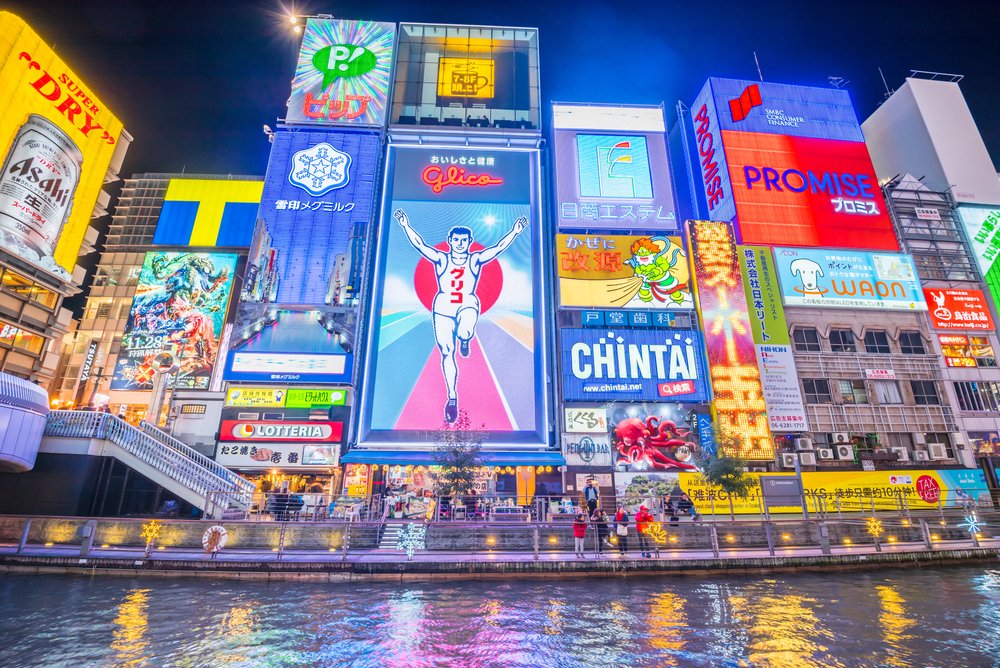
The heart of it. Dotonbori is a canal strip a few hundred metres long, lined with signage on a scale that has to be seen, and it is the single image most people carry away from Osaka. The Glico running man has been there in some form since 1935 and has been rebuilt six times. The Kani Doraku crab has been waving its claws since 1960.
It is at its best after dark, and it stays busy well into the small hours. The surrounding streets, Sennichimae and Hozenji Yokocho in particular, are quieter and often better for eating than the canal itself.
The northern business and shopping district, built around Osaka Station. Department stores, underground malls that sprawl for blocks, and the Umeda Sky Building with its Floating Garden Observatory, an open-air deck connecting two towers at the fortieth floor. Sunset from there is the view worth queueing for.
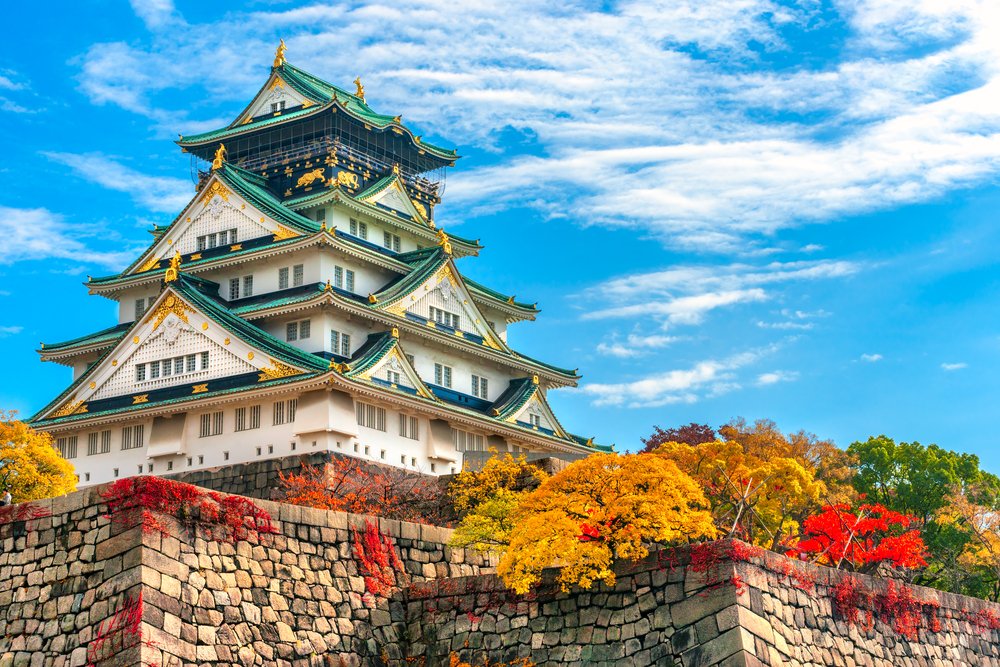
The castle is a reconstruction, and purists will tell you so, but the scale of the stonework and moats is original and genuinely impressive. The surrounding park is large, free and one of the best cherry blossom spots in the city.
Shinsekai was built in 1912 as a vision of the future and then largely forgotten for decades, which is precisely why it is worth visiting. Tsutenkaku tower stands at its centre, and the surrounding streets are the home of kushikatsu, deep fried skewers with a strictly enforced no double dipping rule. Nearby Tennoji has the zoo, a large park and the Abeno Harukas tower.
Universal Studios Japan is out here, along with Super Nintendo World, and the Kaiyukan aquarium, one of the largest in the world and built around a central tank holding whale sharks.
This is the reason a lot of people come, and Osaka takes it seriously. The food here is street food and counter food rather than fine dining, and it is meant to be eaten standing up or elbow to elbow.
Takoyaki are the emblem, spheres of batter with a piece of octopus inside, cooked in a dimpled iron plate and served scaldingly hot. Eating the first one immediately is a rite of passage and a mistake.
Okonomiyaki is a savoury pancake of cabbage, batter and whatever else, cooked on a griddle in front of you. The Osaka style mixes everything together, as opposed to the layered Hiroshima version, and locals from both cities will tell you theirs is correct.
Kushikatsu is skewered and deep fried, and belongs to Shinsekai. There is one communal sauce pot per table and one rule, which is that you dip a skewer once. Never twice.
Beyond those three, look for kitsune udon, which was invented here, and horumon, grilled offal, which is better than it sounds. Kuromon Ichiba market near Nipponbashi is the easiest place to graze across several of these in a morning.
Two days covers Osaka itself comfortably. One for Namba, Dotonbori and Shinsekai, another for the castle, Umeda and the bay.
The stronger argument is to stay longer and use Osaka as a base. Kyoto is fifteen to thirty minutes away, Nara is under an hour, Kobe is twenty minutes and Himeji about an hour. Four or five nights here gives you the whole Kansai region without changing hotels, and at lower nightly rates than Kyoto charges.
Kyoto is the obvious one, and close enough that many people do it daily. Our Kyoto travel guide makes the case for staying at least one night there instead.
Nara is under an hour and holds Todaiji and the deer park. See the Nara travel guide.
Kobe is twenty minutes west for harbour views, beef and the hillside onsen at Arima. The Kobe travel guide covers it.
Himeji is about an hour and has the finest surviving castle in Japan, a short walk from the station. Koyasan, the mountaintop Buddhist complex, is a longer trip on the Nankai line and worth an overnight in temple lodgings if you can spare it. Minoh, just north of the city, is a wooded gorge with a waterfall and a famous autumn walk, and takes barely half an hour to reach.

They are different cities and both are worth time. Kyoto is temples, gardens and history. Osaka is food, nightlife and street life. Most itineraries benefit from both, and Osaka makes the better base for the wider region.
Two days for the city itself. Four or five if you are using it as a base for Kyoto, Nara, Kobe and Himeji.
Osaka is cheaper, better connected and livelier at night. Kyoto rewards early mornings and evenings that day trippers miss. If you can only pick one base for Kansai, Osaka is the more practical choice.
The Nankai Rapi:t reaches Namba in around 35 minutes. The JR Haruka runs to Tennoji and Shin-Osaka. Both are straightforward and well signposted in English.
Takoyaki, okonomiyaki and kushikatsu above all. The city’s culinary identity is built on street and counter food rather than fine dining.
Yes, at least once and preferably after dark. It is touristy and unapologetic about it, but the scale of the signage and the atmosphere are genuinely distinctive. Eat in the surrounding lanes rather than on the canal itself.
Osaka sits at the centre of Kansai, with most of the region inside an hour by train.

Ensure you get the most out of your trip to the land of the rising sun with our comprehensive 249-page Japan Travel Guide.