 Japan Rail Pass NowAustralia's No.1 Choice
1300 635 500Mon-Fri, AEST
Buy Now
Japan Rail Pass NowAustralia's No.1 Choice
Kobe is squeezed into a narrow strip between mountains and sea, which shapes everything about it. The city is long and thin, you are never far from either a hillside or the water, and the night view down from the ridge above is considered one of the finest in Japan.
It was one of the first ports opened to foreign trade in 1868, and that history still shows in the architecture, the food and a general outward-looking feel that sets it apart from its Kansai neighbours. It also rebuilt itself almost entirely after the 1995 earthquake, which killed over 6,000 people.
Kitano is the hillside district where foreign merchants built their homes after the port opened. Around twenty of these ijinkan survive and several are open, a strange and appealing mix of Western styles transplanted onto a Japanese hillside.
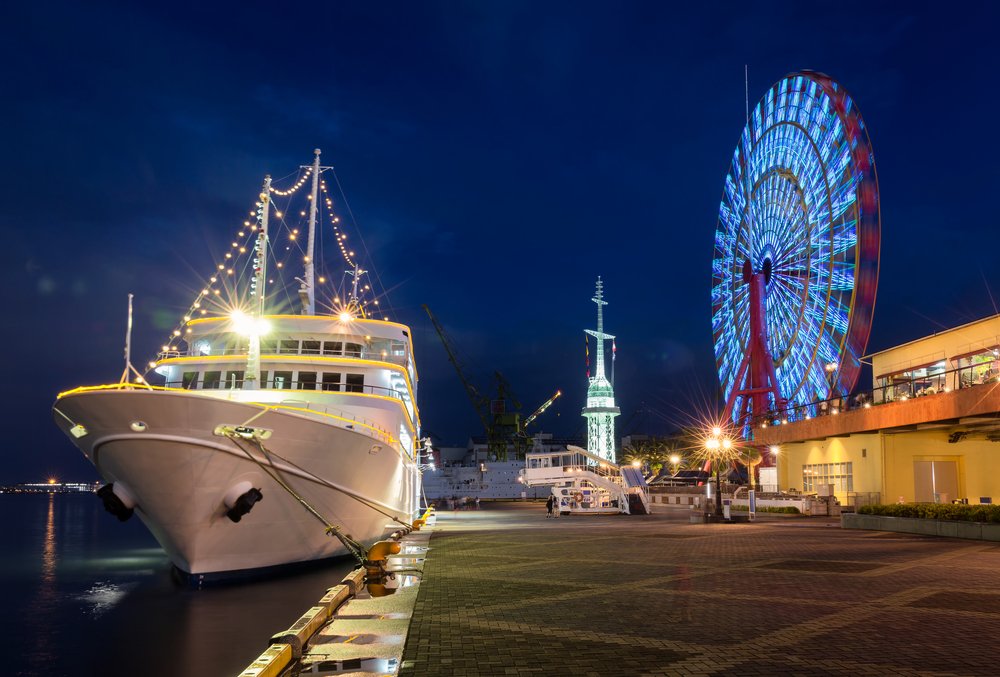
Meriken Park and the harbour front hold Kobe Port Tower and a preserved section of quayside left buckled as it was after the earthquake, as a memorial. It is a quietly effective piece of public memory.
Nankinmachi is the Chinatown, compact and food-focused, best treated as a place to graze rather than sit down.
Mount Rokko and Mount Maya rise directly behind the city. The Kikuseidai viewpoint on Maya is the classic night view, reached by cable car and ropeway. Go at dusk and watch the lights come on along the curve of the bay.
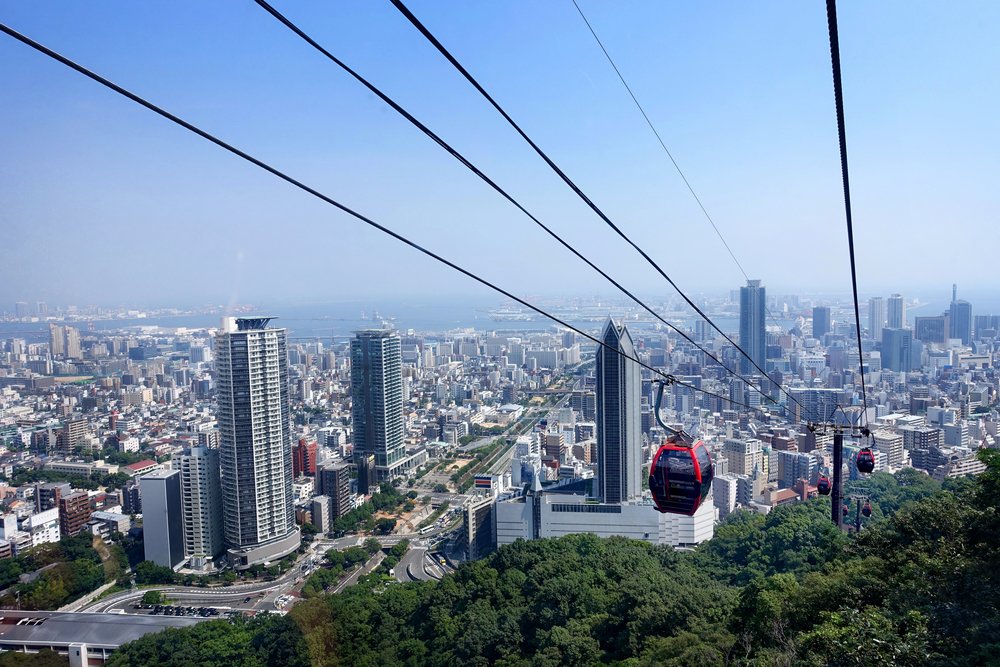
The ridge behind the city is more than a viewpoint. Rokko Garden Terrace at the top has restaurants and an observation deck, and the Rokko Alpine Botanical Garden grows high altitude species that would not survive at sea level nearby.
The Nunobiki Herb Garden is reached by ropeway from directly behind Shin-Kobe station and is the easiest of the hillside options, with terraced gardens stepping down the slope and the Nunobiki Falls on the walking path below.
For the night view specifically, Kikuseidai on Mount Maya is the classic spot, reached by the Maya Cablebeam and ropeway. Check the operating days before you go, since the ropeway closes on Tuesdays outside peak periods and the last descent is earlier than you might assume.
Kobe sits on the coast and is milder than inland Kansai, with slightly less oppressive summers than Kyoto or Osaka. Spring and autumn are the best windows.
The Kobe Luminarie in December is the event worth planning around, an illumination installed each year since 1995 in memory of the earthquake victims. It draws several million visitors over about ten days.
Kobe beef is a specific and legally protected thing: Tajima-strain Japanese Black cattle, raised in Hyogo prefecture, meeting strict marbling and weight criteria. Only a few thousand cattle qualify each year, which is why it costs what it does and why most \u201cKobe beef\u201d sold abroad is not.
In the city, teppanyaki is the usual format, cooked on a steel plate in front of you. A proper lunch course is considerably cheaper than dinner and is the sensible way to try it without a serious outlay. Look for restaurants displaying the certification and the individual animal’s registration number, which is standard practice for the real thing.
Kobe was also one of the first Japanese cities to see significant foreign settlement, and that shows in the food beyond the beef. The city claims the first coffee shops, bakeries and Western style confectionery in Japan, and the bread culture here is genuinely strong. Bakeries around Motomachi and Kitano are worth a detour, and Kobe consistently ranks among the highest bread consuming cities in the country.
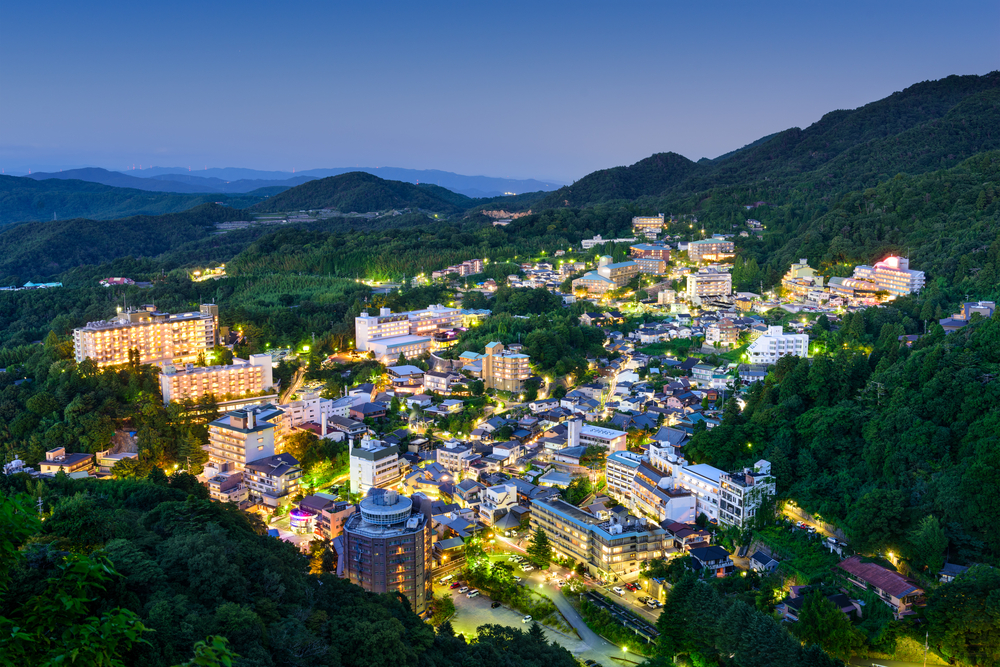
Arima sits on the far side of Mount Rokko, half an hour from the city, and is among the oldest hot spring resorts in Japan with over a thousand years of recorded history.
It has two distinct waters. Kinsen, the gold spring, is heavy with iron and salt and runs a deep rust brown. Ginsen, the silver spring, is clear and carbonated. Both have public bath houses if you are not staying overnight, and the old town is a pleasant tangle of narrow lanes.
Sannomiya is the centre of gravity and where most visitors should stay. It is the main transport hub, and the harbour, Kitano and Chinatown are all within a walk. Shin-Kobe, one subway stop north, suits anyone arriving by Shinkansen but is quieter in the evening.
Staying in Arima Onsen for a night is the alternative, and a good one. The ryokan there give you both waters and a proper kaiseki dinner, and the town is far more atmospheric after the day visitors leave.
The Great Hanshin earthquake struck in January 1995, killed over 6,000 people and destroyed large parts of the city. Understanding that is useful context for why Kobe looks as new as it does.
The Disaster Reduction and Human Renovation Institution covers the event and the reconstruction, and is sobering and well done. At Meriken Park, a short section of the original quayside has been left exactly as the quake left it, buckled and dropped, as a memorial. It is a quiet and effective piece of memory in the middle of an otherwise cheerful waterfront.
The Nada district, east of the centre, produces roughly a quarter of all sake in Japan. The combination of hard local water, good rice and a cold wind off the mountains made it the country’s brewing heartland.
Several breweries run free museums with tastings, including Hakutsuru, Kikumasamune and Sawanotsuru, and they cluster close enough together to walk between. It makes an easy and genuinely interesting half day that most visitors miss entirely.
Sannomiya is also the departure point for the ferries to Awaji Island and, in season, whale watching trips into the Inland Sea. The Kobe Port Tower reopened after a long refurbishment with a rooftop deck, and the Bay Cruise boats run short harbour loops that give you the city from the water, which is how it was built to be seen.
Kobe is long and thin, so most travel is east to west along a few parallel lines. JR, Hankyu and Hanshin all run that axis and all stop at or near Sannomiya. The subway handles north to south, including the run up to Shin-Kobe and on towards Arima.
The City Loop bus is the simplest option for sightseeing, circling Kitano, Sannomiya, Chinatown, Meriken Park and Harborland with a day pass. For Arima, the subway and Hokushin line combination takes about half an hour, or the ropeway over Mount Rokko makes a more scenic approach.
Kobe is about twenty minutes from Osaka and under an hour from Kyoto. Shin-Kobe is the Shinkansen station, sitting on the hillside above the centre and connected to Sannomiya, the main hub, by one subway stop.
Sannomiya is where you want to be. Most of the city’s eating, shopping and transport radiates from it, and Kitano, the harbour and Chinatown are all within a walk.
A day covers Kitano, the harbour and Chinatown, with the night view to finish. Two days lets you add Arima Onsen properly, which is the better plan.
A great many people visit Kobe as a half day from Osaka or Kyoto. That works, but it usually means skipping either Arima or the night view, and both are the reasons to come.
It is genuinely distinctive and strictly regulated, so you are getting something specific. A lunch teppanyaki course costs far less than dinner and is the sensible way to try it.
One day for the city, two if you want to include Arima Onsen without rushing.
The view down over the bay from Mount Maya or Mount Rokko, reached by cable car and ropeway. It is rated among the three best night views in Japan.
Easily, it is about twenty minutes by train, and many people do it as a half day. Staying later for the night view is worth considering.
Kinsen, an iron-rich brown spring, and Ginsen, a clear carbonated one. Both have public baths open to day visitors.

Ensure you get the most out of your trip to the land of the rising sun with our comprehensive 249-page Japan Travel Guide.