 Japan Rail Pass NowAustralia's No.1 Choice
1300 635 500Mon-Fri, AEST
Buy Now
Japan Rail Pass NowAustralia's No.1 Choice
Hakone is where Tokyo goes to sit in hot water and look at a mountain. It sits inside the caldera of an active volcano about ninety minutes from the city, and the whole area is built around a circuit of small railways, cable cars, a ropeway and a boat that together make the transport as much of the attraction as the destinations.
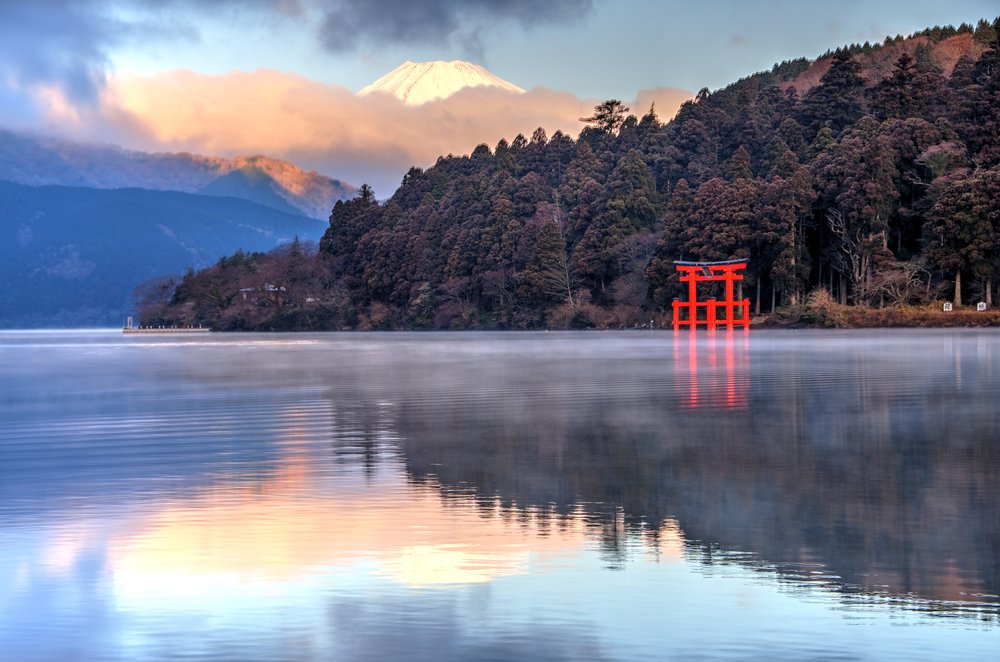
The catch is Mount Fuji. It is visible on perhaps a third of days, and less in summer. Go expecting hot springs, art museums and volcanic scenery, and treat a Fuji sighting as a bonus rather than the plan.
Hakone is designed to be travelled as a circuit rather than out and back, and doing it in order is the point.
From Hakone-Yumoto, the Hakone Tozan Railway climbs to Gora by switchback, reversing direction three times because the gradient is too steep for a direct line. It is the oldest mountain railway in Japan and passes through hydrangeas in June.
From Gora, a cable car runs up to Sounzan, then the Hakone Ropeway crosses over Owakudani, a valley of steaming sulphur vents, and down to Lake Ashi. From there a pirate ship crosses the lake to Hakonemachi or Moto-Hakone, and buses return to Yumoto.
The full loop takes most of a day at a relaxed pace.
Owakudani was created by an eruption around 3,000 years ago and still vents sulphurous steam. The signature product is kuro-tamago, eggs boiled in the springs until the shells turn black, said to add seven years to your life.
The ropeway occasionally closes at short notice when volcanic activity increases, with buses substituting. Check the status before you commit to the loop in that direction.

Hakone Shrine sits in cedar forest on the lake shore, and its red torii gate stands in the water below. It is one of the most photographed spots in the country and the queue for a photograph at the gate can be substantial.
The Ancient Cedar Avenue nearby is a preserved stretch of the old Tokaido highway, and the Hakone Checkpoint is a faithful reconstruction of the barrier station where the shogunate controlled movement along it.
Hakone has an unusual concentration of good galleries for a hot spring town, largely because Tokyo money has been building second homes here for over a century.
The Hakone Open-Air Museum is the standout, seventy thousand square metres of hillside with sculpture set against the mountains, including a large Henry Moore collection and a dedicated Picasso pavilion holding several hundred works. There is a hot spring foot bath on site, which tells you something about how the town approaches art.
The Pola Museum of Art is sunk into the forest to preserve the trees, with the bulk of the building underground. It holds one of the strongest Impressionist collections in Japan, including Monet, Renoir and Van Gogh.
The Okada Museum is the largest, focused on Japanese and East Asian art, with an enormous painted wind god and thunder god across its facade. The Hakone Venetian Glass Museum and the Narukawa Art Museum, the latter with a panoramic window over Lake Ashi, round out the set.
The Hakone Open-Air Museum sets sculpture across a hillside with mountains behind, and includes a substantial Picasso collection. The Pola Museum holds French Impressionists in a building sunk into the forest, and the Okada Museum is the largest of the three.
For onsen, Hakone-Yumoto has the greatest concentration of day-use baths, most within walking distance of the station. Many ryokan across the area open their baths to non-staying guests for a few hours in the middle of the day.

Hakone is a place to sleep, not just visit, and the ryokan are the reason. Hakone-Yumoto is the most convenient, at the foot of the valley where the train arrives, with the largest choice and the easiest access to day-use baths.
Gora and Miyanoshita sit higher up the mountain railway and are quieter, with several historic properties including the Fujiya Hotel, open since 1878 and one of the oldest Western style hotels in Japan. Sengokuhara and the area around Lake Ashi are quieter still and better if you want views over the caldera.
Most ryokan include dinner and breakfast in the rate, and the kaiseki dinner is a substantial part of what you are paying for. Rooms with a private open air bath cost noticeably more and are worth it if the budget stretches.
If this is your first Japanese hot spring, the rules are simple and taken seriously. Wash and rinse thoroughly at the seated showers before entering the bath. The bath itself is for soaking, not cleaning. No swimwear, and the small towel you are given does not go in the water, most people rest it on their head.
Baths are usually separated by gender. Tattoos remain an issue at some traditional establishments, though attitudes are relaxing and many places now allow them or provide cover stickers. If you have visible tattoos, it is worth checking with your ryokan when booking rather than at the door.
Hakone works year round, and each season changes what you get. Clear winter days give the best odds of seeing Mount Fuji, since the air is dry and haze is minimal. Summer is the worst for that, though the hydrangeas along the mountain railway in June are a genuine draw in their own right and the trains run illuminated night services during the bloom.
Autumn colour peaks in November and the area gets busy with day trippers from Tokyo. Weekends and holidays are consistently the most crowded, and the ropeway and pirate ship both queue. A midweek visit is a different experience.
The Odakyu Romancecar runs from Shinjuku to Hakone-Yumoto in about 85 minutes with a reserved seat supplement. Ordinary Odakyu services take a little longer and cost less. By JR, take the Tokaido line or Shinkansen to Odawara and change.
The Hakone Free Pass, an Odakyu ticket, covers the whole loop and usually costs less than buying the legs separately.
A day trip covers the loop. An overnight is much better, because the point of Hakone is soaking in hot water without watching the clock, and the ryokan dinner is half the experience.
Clear winter days give the best odds on Fuji. Summer is the worst, with haze most days.
Perhaps a third of days, and less in summer. Winter mornings give the best odds. Plan the trip around the hot springs and scenery, and treat Fuji as a bonus.
Most of a day at a relaxed pace, using the mountain railway, cable car, ropeway and boat in sequence.
Yes. The area is built around ryokan and onsen, and a day trip means rushing the part that makes it worthwhile.
Kuro-tamago, boiled in the sulphur springs at Owakudani until the shells blacken. Local lore says each one adds seven years to your life.
The Odakyu Romancecar from Shinjuku takes around 85 minutes to Hakone-Yumoto. By JR, go to Odawara and change.

Ensure you get the most out of your trip to the land of the rising sun with our comprehensive 249-page Japan Travel Guide.