 Japan Rail Pass NowAustralia's No.1 Choice
1300 635 500Mon-Fri, AEST
Buy Now
Japan Rail Pass NowAustralia's No.1 Choice
Sendai is the largest city in the Tohoku region and the least touristed major city in Japan, which is much of its appeal. It is known as the City of Trees for the zelkova avenues running through the centre, and it was founded by Date Masamune, the one-eyed warlord whose crescent-moon helmet turns up on souvenirs across the north.
Most visitors treat it as a staging post for Matsushima Bay and the wider Tohoku region, which is reasonable, though the city itself is pleasant and unusually easy to spend time in.
Around 260 pine-covered islets scattered across a shallow bay, and one of the three classic views of Japan alongside Miyajima and Amanohashidate. The poet Basho is said to have been struck speechless by it.
Sightseeing boats loop the bay in about fifty minutes. Zuiganji, the Zen temple by the shore, is one of the finest in Tohoku, with cave tombs cut into the cliff alongside its approach. Godaido, a small hall on a rocky islet reached by a red bridge, is the emblem of the bay.
The islands absorbed much of the force of the 2011 tsunami, which is why Matsushima survived comparatively lightly when the surrounding coast did not.
Worth a few specifics, since most visitors give it a rushed couple of hours and it rewards more.
The sightseeing boats loop the bay in about fifty minutes and are the standard way to see the islets. Sit on the open upper deck if the weather allows, since the enclosed lower deck loses most of the point.
Zuiganji, the Zen temple, was rebuilt by Date Masamune in 1609 and is one of the finest in Tohoku, with painted sliding doors and cave tombs cut into the cliff along the approach path. Entsuin next door has a rose garden and a mausoleum with what is thought to be the oldest Western style design in Japan, a legacy of the Date mission to Rome.
Four viewpoints on the surrounding hills are collectively called the great views of Matsushima, each giving a different angle across the bay. Otakamori is the most rewarding and takes about twenty minutes to climb.
Two of the small islands are connected to the shore by bridges you can walk across. Fukuurajima is a botanical island reached by a long red footbridge, and Godaido sits on a rocky outcrop reached by a short bridge with gaps in the planking, deliberately made to focus the mind before entering a sacred place.
Aoba Castle is mostly gone, but the hilltop site gives a broad view over the city and carries the equestrian statue of Date Masamune that appears on most Sendai postcards.
Zuihoden is his mausoleum, rebuilt in the ornate Momoyama style of the original, set among tall cedars. It is more impressive than the castle site and less visited.
Jozenji-dori is the tree-lined avenue that gives the city its nickname, and it hosts a jazz festival in September and an extensive illumination through December.
Sendai is known for gyutan, grilled beef tongue, which sounds unpromising and is genuinely good, usually served as a set with barley rice and oxtail soup.

Yamadera, an hour west, is a temple complex clinging to a wooded mountainside, reached by a thousand stone steps. The view from the top over the valley is one of the best in Tohoku.
Naruko Onsen is a hot spring town known for its wooden kokeshi dolls, and Zao has a volcanic crater lake in summer and, in winter, the frost-covered trees known as snow monsters.

Almost everything sits around Sendai Station, which is where the Shinkansen arrives and where the hotel supply is concentrated. Kokubuncho, a short walk west, is the entertainment district and the largest of its kind north of Tokyo.
Staying in Matsushima itself is worth considering for one night, since the bay at dawn and dusk without the day trippers is a quite different place, and several ryokan there have baths looking over the water.
Sendai exists because of one man. Date Masamune, the one-eyed dragon of Oshu, founded it in 1600 and ruled a domain that was among the wealthiest in the country. He lost an eye to smallpox as a child, wore a crescent moon on his helmet, and was ambitious enough to send an envoy across the Pacific and on to Rome in 1613 seeking trade with Spain.
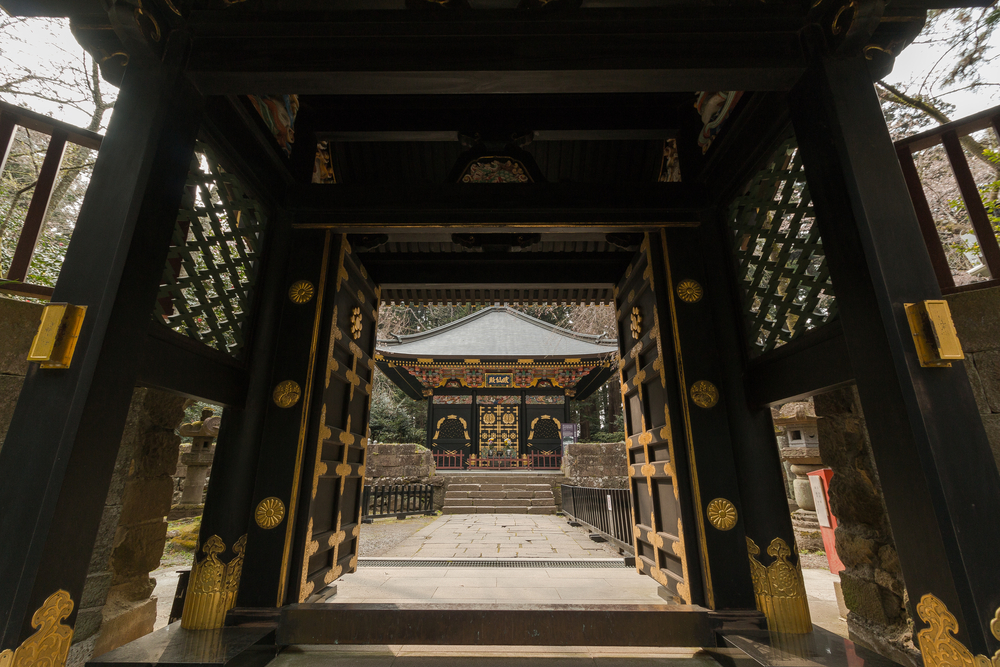
His mausoleum, Zuihoden, was rebuilt after wartime destruction in the ornate Momoyama style of the original, all gold leaf and painted carving, set among cedars on a hillside. It is more rewarding than the castle ruins, and the adjoining museum displays items recovered when the tomb was excavated.
Gyutan, grilled beef tongue, is the dish the city is known for. It was created here after the war, when a chef looked at the cuts being discarded by the occupying forces and worked out what to do with them. It is served sliced thick, grilled over charcoal, as a set with barley rice and oxtail soup, and it is far better than the description suggests.
Zunda is the other local speciality, a sweet paste of mashed young soybeans, bright green and used on mochi and in shakes. Sasa kamaboko are fish cakes shaped like bamboo leaves. The coast nearby also produces excellent oysters, at their best from late autumn.
Worth knowing before you visit. The Great East Japan Earthquake and tsunami struck this coast in March 2011, and the Sendai plain was among the worst affected areas. The city itself, set slightly inland, came through comparatively well, and Matsushima was partly shielded by its islands.
The coastal areas east of the city were not. Several memorial sites and museums along the coast document what happened, including the preserved ruins of schools that were struck. They are handled with care rather than spectacle. If you have any interest in it, the Sendai Arahama Elementary School site is open and is a sobering hour.
Sendai is the natural base for a region that most foreign visitors skip entirely, which is precisely its appeal.
Yamadera, an hour west, is a temple complex built into a cliff face, reached by a thousand stone steps through cedar forest. The poet Basho stopped here in 1689 and wrote one of his best known verses about the silence.
Zao has a vivid blue volcanic crater lake in summer, and in winter the snow covered trees known as juhyo, or snow monsters, which are lit at night. Naruko Onsen is a hot spring town known for kokeshi wooden dolls. Hiraizumi, a UNESCO site, holds the gold leafed Konjikido hall built by a northern branch of the Fujiwara family.
Sendai Tanabata in early August is the largest star festival in Japan, with the shopping arcades hung with enormous paper and bamboo streamers, some several metres long, made fresh each year.
The Jozenji Street Jazz Festival in September fills the city with several hundred acts on outdoor stages, and the Pageant of Starlight lights the zelkova avenues through December. Autumn colour and spring blossom both arrive later here than in Tokyo, which is useful if you have missed them further south.
The Tohoku Shinkansen runs from Tokyo in about 90 minutes, which surprises people who assume Tohoku is remote. Matsushima is around 40 minutes further on a local line.
The city has a compact subway and a tourist loop bus that covers the castle site, Zuihoden and the main museums.
Sendai is compact and the two subway lines cross at the station, which makes orientation simple. The Loople Sendai tourist bus is the easier option for sightseeing, running a circuit from the station past Zuihoden, the castle site, the museums and Jozenji-dori, with a day ticket that also gives small discounts at the sites it stops at.
For Matsushima, local trains on the Senseki line run from Aoba-dori or Sendai station in around 40 minutes to Matsushimakaigan, which is the closer of the two stations to the bay. Sendai Airport connects to the station by a dedicated line in about 25 minutes.
Two days covers Sendai and Matsushima comfortably. Most people use it as the first stop on a longer run north through Tohoku, which is one of the better-value regions in Japan and among the least crowded.
As a base for Matsushima Bay and Tohoku, definitely. The city itself is pleasant rather than spectacular, and it is notably free of crowds.
About 90 minutes on the Tohoku Shinkansen.
A bay of around 260 pine-covered islets, counted among the three great views of Japan, roughly 40 minutes from Sendai.
Gyutan, grilled beef tongue, usually served as a set with barley rice and oxtail soup.

Ensure you get the most out of your trip to the land of the rising sun with our comprehensive 249-page Japan Travel Guide.