 Japan Rail Pass NowAustralia's No.1 Choice
1300 635 500Mon-Fri, AEST
Buy Now
Japan Rail Pass NowAustralia's No.1 Choice
Yokohama is Japan’s second largest city by population and sits half an hour south of Tokyo, close enough that a lot of people assume it is a suburb. It is not. It was a fishing village until 1859, when it became one of the first ports opened to foreign trade, and it grew into something distinctly its own: more open, more international, and considerably more relaxed than the capital.
For visitors it works best as a half day or full day from Tokyo, and it makes a particularly good evening, since the waterfront is at its best after dark.
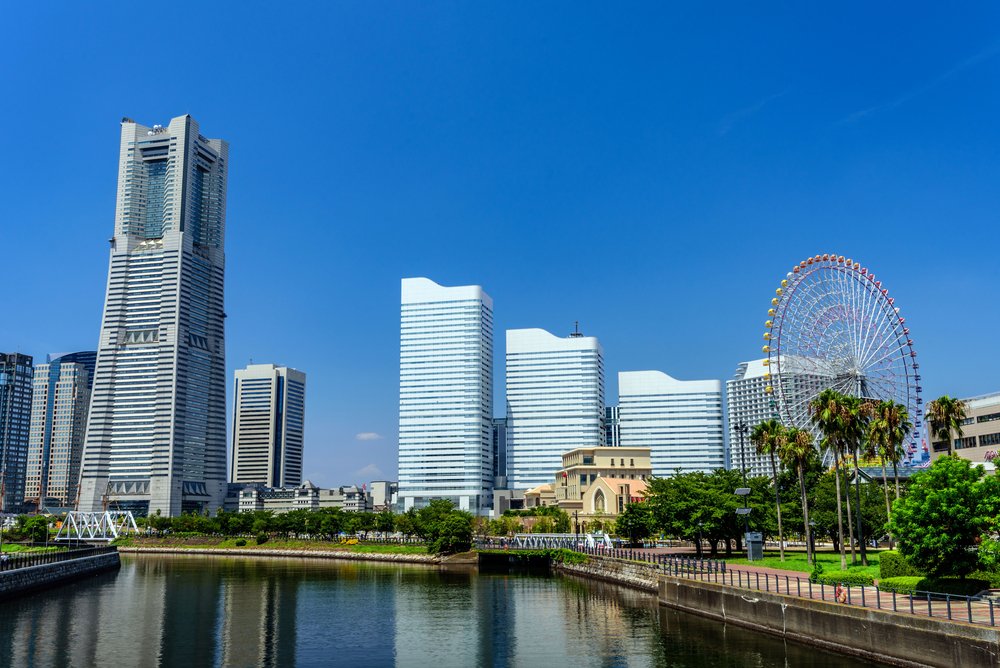
The waterfront district, built on former dockyards, and the reason most people come. Landmark Tower was the tallest building in Japan for two decades and has an observation deck on the 69th floor reached by one of the fastest lifts in the world.
The Cosmo Clock 21 ferris wheel doubles as the world’s largest clock and defines the skyline at night. The Red Brick Warehouse, a pair of restored Meiji-era customs buildings, now holds shops and restaurants and hosts seasonal events including a Christmas market and a winter ice rink.
The whole area is walkable along the water, and the sequence from Sakuragicho station out to the warehouses and on to Yamashita Park is one of the better urban walks near Tokyo.

Yokohama Chinatown is the largest in Japan and among the largest anywhere outside China, with several hundred restaurants packed into a small grid behind ornate painted gates.
It is busy, loud and unapologetically commercial. Eat standing up: nikuman steamed buns, xiaolongbao, and grilled skewers from the street vendors are better value than most of the sit-down places. Kanteibyo, the Chinese temple at its centre, is worth stepping into.
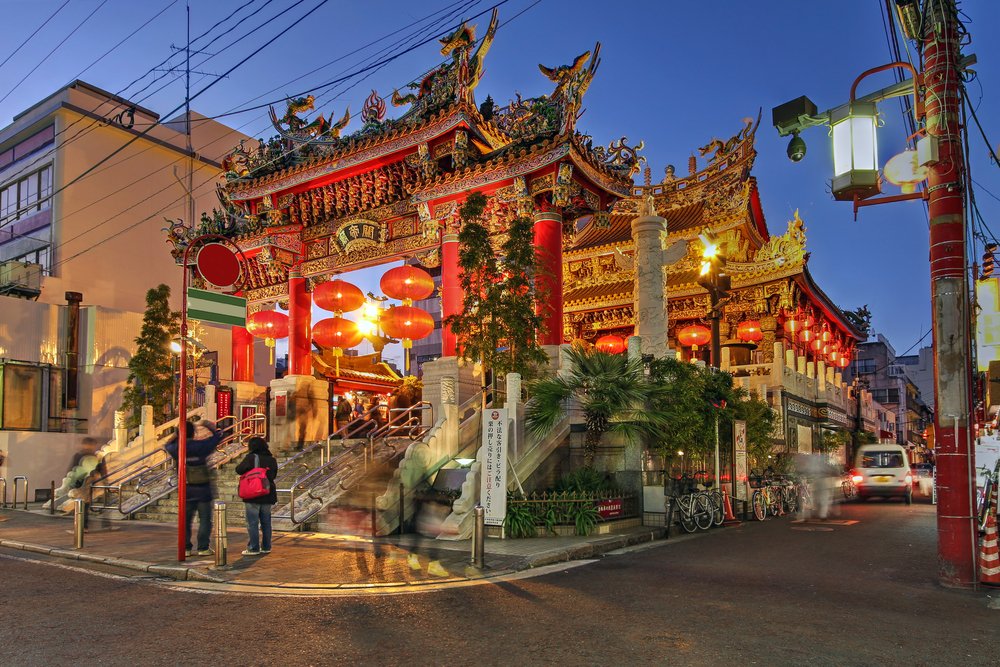
Yokohama Chinatown dates from the 1860s, when Chinese traders arrived alongside the Western merchants, often as intermediaries because they could read the Chinese characters used in Japanese. It now runs to several hundred restaurants in about half a square kilometre.
The trick is to avoid the all you can eat buffets on the main drag, which are the most visible and the least interesting. Better to graze from the street vendors, since nikuman steamed buns, xiaolongbao, grilled squid and egg tarts are all sold from windows, and then sit down at one of the smaller places on the side streets.
Ten gates mark the boundaries, each painted in the colour of its compass direction according to Chinese geomancy, and Kanteibyo, the ornate temple at the centre, is dedicated to the god of business and worth stepping into.
Yamashita Park runs along the waterfront and holds the Hikawa Maru, a 1930 ocean liner that carried passengers to Seattle and is now open to walk through. It is a genuine slice of pre-war Japan.
The Nippon Maru, a preserved sail training ship, sits in a dock beside Minato Mirai and opens its rigging on some days. Zou-no-hana Park, between the two, marks the site of the original 1859 pier.
For something entirely different, Noge just west of Sakuragicho is a dense grid of tiny bars and izakaya, the closest Yokohama gets to a Shinjuku alley district, and considerably cheaper than its Tokyo equivalents.
A traditional garden opened in 1906 by a silk merchant, who assembled it by relocating historic buildings from across Japan into the grounds. There are seventeen of them, including a three storey pagoda from Kyoto dating to 1457 and a villa from Wakayama.
It is a genuine surprise, and considerably quieter than anything comparable in Tokyo. Best in plum season in February, cherry blossom in early April, or autumn colour in late November.

Yokohama also hosts one of the largest fireworks displays in the Kanto region in summer, and the bay setting means you can watch from almost anywhere along the waterfront rather than fighting for a spot. Check dates before travelling, since they shift year to year.
Yokohama has a run of small, specific museums that are more fun than they sound. The Cup Noodles Museum lets you design your own packaging and choose your fillings. The Shin-Yokohama Ramen Museum is a recreated 1958 streetscape in a basement, holding branches of famous ramen shops from around the country, which means you can eat several regional styles in one sitting.
The Yokohama Archives of History and the Silk Museum cover the port years properly if you want the actual history.
Yokohama was a fishing village of a few hundred people until 1859. When the treaties forced Japan to open to foreign trade, the shogunate chose this spot deliberately, far enough from Edo to keep foreigners at arm’s length. Within decades it was the country’s main gateway, and much of what arrived in Japan first arrived here.
The city claims a long list of Japanese firsts as a result: the first daily newspaper, the first gas street lamps, the first railway, the first ice cream, the first beer brewery. The Yokohama Archives of History, in the former British consulate, covers the period properly, and the Silk Museum explains the trade that funded it, since raw silk was Japan’s dominant export through the port.
Yamate, the hillside above Motomachi, is where the foreign residents lived. Several Western houses are preserved and open, and the Foreign General Cemetery nearby holds around 5,000 graves from more than forty countries.
Most visitors do not stay, since Tokyo is half an hour away, but if you do, the Minato Mirai hotels have the harbour views and the Sakuragicho and Kannai area is cheaper and closer to Chinatown.
The waterfront works year round. Summer evenings bring fireworks over the bay, and winter is the strongest season, with the Red Brick Warehouse Christmas market and ice rink running through December and the illuminations along the harbour front.
Worth expanding on because it is the most underrated thing in the city. Hara Sankei made his fortune in silk and spent it relocating historic buildings from Kyoto, Kamakura and Wakayama into a hillside garden he opened to the public in 1906.
The three storey pagoda from Tomyoji in Kyoto dates to 1457 and is the oldest structure. There is a villa built for a Tokugawa lord, a farmhouse from the Gifu mountains with a steep thatched roof of the kind you see at Shirakawago, and several tea houses. The buildings are spread around ponds and streams across seventeen hectares, and the effect is of a garden assembled from pieces of the country.
It is at its best in plum season in February, cherry blossom in early April, irises in June and autumn colour in late November.
Yokohama is 25 to 30 minutes from Tokyo Station and about half an hour from Shibuya. Several lines run there and most Tokyo hotels are within easy reach of one.
Once you arrive, the Minatomirai line links the main areas, and the sights along the waterfront are best connected on foot. Sakuragicho, Minatomirai and Motomachi-Chukagai are the three stations you are likely to use.
Half a day covers Minato Mirai and Chinatown. A full day lets you add Sankeien and one of the museums.
Aim to be on the waterfront around sunset. The transition as the tower and the ferris wheel light up is the best thing the city does, and a lot of visitors leave just before it.
Yes, particularly for an evening. The waterfront after dark, Chinatown and Sankeien give it a character quite distinct from the capital.
About 25 to 30 minutes by train from Tokyo Station, and roughly half an hour from Shibuya.
The Minato Mirai waterfront, the largest Chinatown in Japan, its history as one of the first ports opened to foreign trade, and a couple of unusually good food museums.
Half a day covers the essentials. A full day if you want Sankeien Garden and a museum as well.

Ensure you get the most out of your trip to the land of the rising sun with our comprehensive 249-page Japan Travel Guide.