



Fukuoka Travel Guide
 Overview
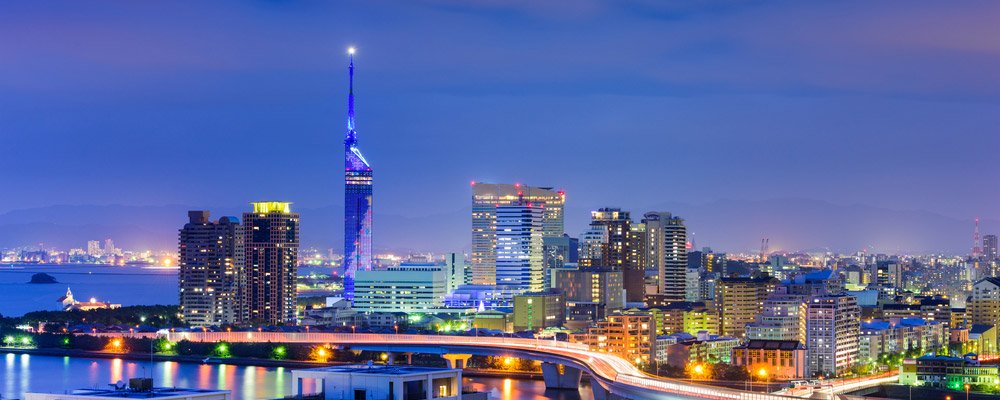
The largest city on the island of Kyushu, Fukuoka is a densely populated metropolis located close to mainland Asia. For several centuries now, it has served as a key harbour town of Japan and used to be the entry point of Mongol conquerors in the 1200s.
Today, Fukuoka is among the liveliest cities in the south and attracts tourists from around the world throughout the year.
 When To Go
- Spring (March – May) in Fukuoka is prime cherry blossom viewing time at the different city parks.
- The highlight of Fukuoka’s summer (June – August) is the Gion Yamakasa, but going to the beach and drinking cold beer are also favourite acitivities for both locals and tourists.
- In autumn (September – November), the city observes the Hojoe or Hojoya festival and also celebrates the turning colours of the leaves, with viewings in various spots.
- During the winter (December – February), the city becomes a bright and colourful place as Christmas decorations and lanterns are put up in malls, stations, and other public spaces.
Seaside Momochi
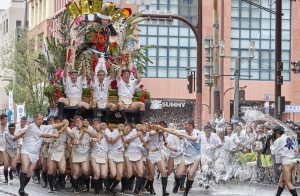
Gion Yamakasa – ©JNTO
 Things To See
Attend the Gion Yamakasa
To get a feel of the customs and traditions of Fukuoka, planning your trip to coincide with the Hakata Gion Yamakasa is a must. This festival is an annual celebration held in early July, and it features a float racing contest, where the different Hakata neighborhoods design their own floats and race five kilometres through the city centre.
Explore the Fukuoka Castle Ruins
Constructed in the early 1600s, the Fukuoka Castle served as the residence of the ruling Kuroda clan, headed by Kuroda Nagamasa. Because in many minds it represented feudalism in Kyushu, there were many attempts to tear the castle down after the Meiji Restoration.
Today, the complex consists of wall ruins, some turrets, guard towers, and gates. It is mainly a park that offers walking trails and fantastic viewing spots from which to see cherry blossoms or autumn leaves at the right times of year.
Relax at the parks
- Ohori Park – Centrally located, Ohori Park is a public park that offers walking and running trails, a pond, beautifully landscaped gardens, and a pavilion over the water.
- Uminonakamichi Seaside Park – A great place for a family outing, the Uminonakamichi Seaside Park lies close to the bay, with a small amusement park, a zoo, a water park, flower gardens, picnic spaces, and playgrounds.
Visit the Shofukuji Temple
The first ever Zen temple built in Japan, the Shofukuki was constructed in 1195 and was home to Zen Buddhism’s Rinzai sect. The complex consists of the main temple, several smaller wooden buildings, gardens, gates, and a small pond.
Eat at Yatai (food stalls)
Yatai, or open air food stalls, are recognised as one of the trademarks of Fukuoka. Each stall can seat about six to eight people, and offers a wide selection of local cuisine, such as ramen, yakitori, and oden, as well as different beverages.
At 6 pm, these food stands start to operate, and they quickly fill up with people. Seeing long lines outside each stall is common, as everyone waits to get seated.
Yatai are usually open Mondays to Saturdays, except when the weather is really bad.
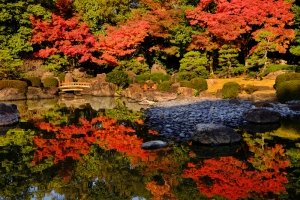
Gardens in Fukuoka

Eat at Yatai (food stalls) – ©JNTO
 Where To Explore
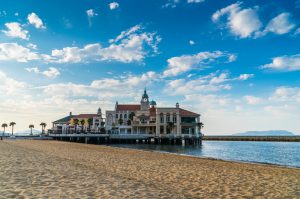
- Seaside Momochi – Located on the bayside area of Hakata, Seaside Momochi is a modern district that offers many entertainment options, including museums, beaches, shopping malls, and restaurants.
- Canal City – A vast entertainment, shopping and dining complex, Canal City is home to more than 200 cafes, shops and restaurants. It also has hotels, cinemas, a theatre, and a canal. It is best known for its Ramen Stadium, a floor with several ramen restaurants that serve delicious varieties of ramen.
- Tenjin Underground City – An underground shopping mall that is easily accessible from Tenjin Subway Station, Fukuoka Airport and Hakata Station, Tenjin Underground City features stores and shops lining its European-style corridors. You can find a wide selection of affordable and high-end clothes, bags, shoes and accessories, as well as local crafts. The 600-metre long shopping street is the largest of its kind on Kyushu Island.
 Getting Around
Fukuoka has three subway lines that connect the different parts of the city. It also has a bus service that covers the tourist loop.