 Japan Rail Pass NowAustralia's No.1 Choice
1300 635 500Mon-Fri, AEST
Buy Now
Japan Rail Pass NowAustralia's No.1 Choice
Okinawa is Japan without most of the things people picture when they think of Japan. It is subtropical, roughly 640 kilometres south of the mainland, and until 1879 it was not Japan at all but the independent Ryukyu Kingdom, trading across East Asia and developing its own language, architecture, music and food.
It is also the site of one of the bloodiest battles of the Second World War, and hosts a large and politically contentious American military presence. Both shape the islands today. Visitors come mainly for the beaches and the diving, which are the best in Japan by a wide margin.
There is no rail connection to Okinawa, because there is no long-distance railway on the islands at all. You fly. Naha is around two and a half hours from Tokyo and ninety minutes from Osaka.
On the main island, Naha has a single monorail line, the Yui Rail, covering the city itself. Everything beyond it means a bus or a hire car, and most visitors hire a car, because the beaches and the aquarium are spread along the coasts and buses are slow.
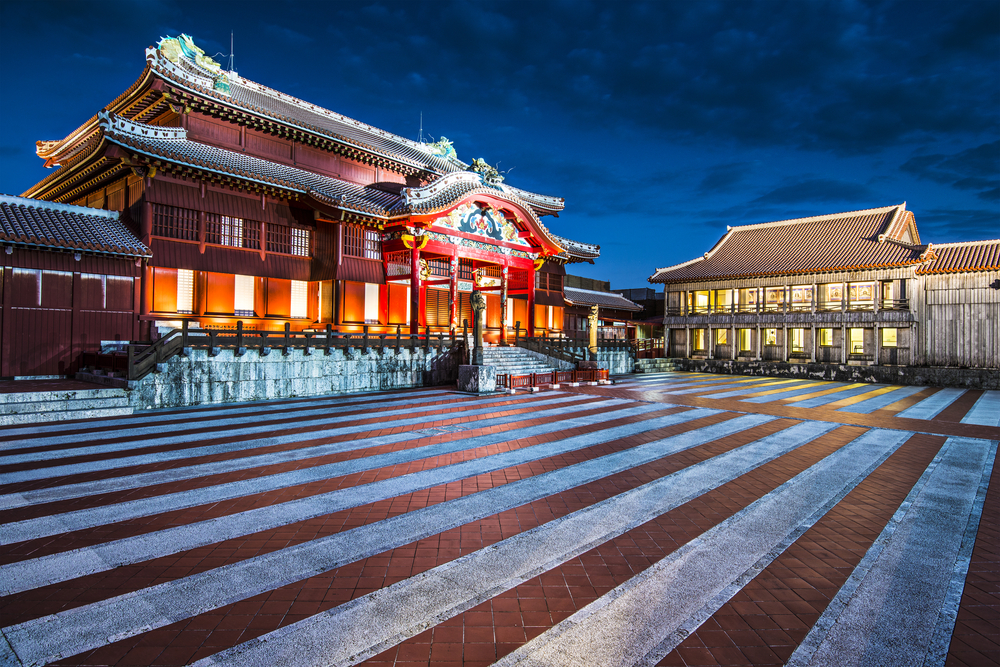
Shuri Castle was the seat of the Ryukyu kings and looks unlike any castle on the mainland, with Chinese-influenced red lacquer and curved walls. It burned down in 2019, the latest of several destructions, and reconstruction is ongoing. Parts of the site remain open and the rebuilding work is itself interesting to watch.
Kokusai-dori is Naha’s main street, a kilometre and a half of shops and restaurants, touristy but useful. The Tsuboya pottery district just off it is quieter and better, with workshops producing the distinctive Okinawan ceramics.
The Battle of Okinawa in 1945 killed an estimated 200,000 people, roughly a quarter to a third of the civilian population. The Peace Memorial Park in the south lists the names of all the dead of all nationalities on stone walls, and the museum there is unsparing.
The Former Japanese Navy Underground Headquarters is a preserved tunnel complex where the naval command took its own lives. These sites are considerably less visited than Hiroshima or Nagasaki and are worth the effort.
The Churaumi Aquarium in the north is among the largest in the world and built around a tank holding whale sharks and manta rays. It is the single most visited attraction in Okinawa.
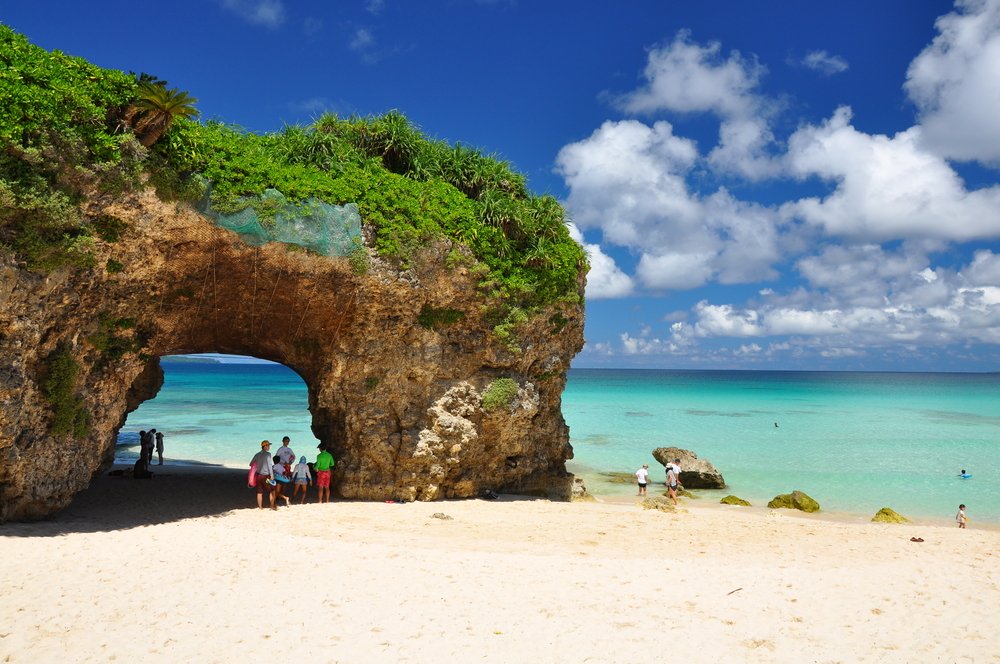
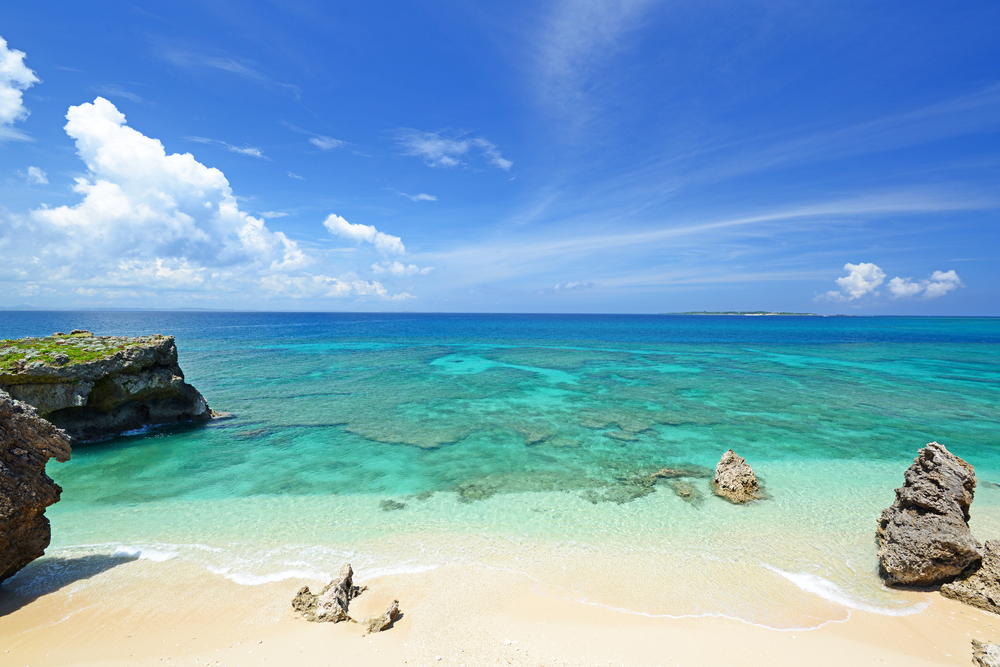
The best beaches are not on the main island. The Kerama Islands, a short ferry from Naha, have some of the clearest water in Japan. Miyako and Ishigaki, further south and reached by short flights, have the finest beaches and diving in the country, including manta cleaning stations.
Diving and snorkelling run year round, with water temperatures staying comfortable even in winter.
The main island splits into three broad options. Naha in the south is the transport hub, the cheapest, and the right base if you are focused on history, the war sites and the city itself. It is not where the good beaches are.
The west coast resort strip, running north from Chatan through Onna, is where most of the beach resorts sit, roughly an hour from the airport. The far north, around Motobu near the aquarium, is quieter and greener.
On the outer islands, Ishigaki and Miyako both have resort development and guesthouses, and the smaller Kerama islands have simple accommodation that books out fast in summer.
This is the best diving in Japan by a wide margin and among the better diving in Asia. Water temperatures stay between about 21 and 29 degrees, so it runs year round, and visibility is frequently over thirty metres.
The Kerama Islands, a national park since 2014, have the clarity that gets called Kerama Blue, and humpback whales calve there between January and March. Miyako is known for dramatic underwater rock formations, caves and arches rather than coral. Ishigaki has Manta Scramble, a cleaning station where mantas gather reliably from spring to autumn.
The Blue Cave at Cape Maeda on the main island is the accessible option, snorkelled by large numbers daily and still striking. Certification courses are widely available in English.
Okinawa was an independent kingdom trading across East Asia for over four centuries, and the differences from mainland Japan run deep.
The Ryukyuan languages are related to Japanese but not mutually intelligible, and are now endangered. Sanshin music, played on a three stringed instrument covered in snakeskin, remains widely performed, and eisa drum dancing is a summer fixture. Shisa, the lion dog figures on rooftops and gateposts, are everywhere once you notice them, always in pairs with one mouth open and one closed.
The islands also have a distinct textile tradition, including bingata dyeing and Ryukyu kasuri weaving, and a pottery tradition centred on the Tsuboya district in Naha and the village at Yomitan.
Hire a car unless you are staying in Naha only. The Yui Rail monorail covers Naha itself, from the airport through Kokusai-dori to Shuri, and it is useful, but it goes nowhere else on the island.
Buses reach the aquarium and the resort strip but are slow and infrequent. Driving is straightforward, roads are good, and an international permit is required alongside your licence. Traffic around Naha is heavy at peak times.
Between islands, ferries serve the Keramas from Naha in under an hour, while Miyako and Ishigaki are short flights.
Okinawan food is distinct. Goya champuru is a stir fry with bitter melon, tofu and pork. Rafute is slow-braised pork belly, and Okinawa soba uses wheat noodles in a pork broth, unrelated to buckwheat soba. Awamori is the local distilled spirit, aged in clay pots.
The islands have long been studied for exceptional longevity, and the traditional diet is usually credited. Sanshin music, played on a three-stringed snakeskin instrument, is still widely performed.
Okinawa became widely known as a Blue Zone, one of a handful of places studied for unusually high numbers of people living past a hundred. The traditional diet is generally credited: heavy on sweet potato, bitter melon, seaweed, tofu and small amounts of pork, with far less rice than mainland Japan.
The picture is more complicated now. Younger generations eat very differently, partly a legacy of the American military presence and the fast food that came with it, and Okinawan life expectancy rankings have fallen from where they were. It is still a genuinely distinctive food culture, and the older style is easy to find in Naha’s markets and in the small restaurants that serve set meals.
Makishi Public Market in Naha is the place to see it, with fish in colours you will not recognise, pork in every form, and stalls upstairs that will cook whatever you buy downstairs.
April to June and October to November are the best windows: warm, clear and outside the typhoon peak. Typhoon season runs roughly July to September and can disrupt flights and ferries at short notice. Winter is mild but too cool for comfortable swimming for most people.
Four or five days for the main island. A week or more if you are island hopping to Miyako or Ishigaki, which is what most repeat visitors end up doing.
No. There is no rail link to the islands and no long-distance railway on them. You fly, around two and a half hours from Tokyo.
On the main island, effectively yes. The monorail only covers Naha, and buses to the beaches and the aquarium are slow.
April to June or October to November. Avoid July to September if you can, as that is typhoon season.
Not on the main island. The Kerama Islands are a short ferry from Naha, and Miyako and Ishigaki are short flights south and have the best in Japan.
Yes, substantially. It was the independent Ryukyu Kingdom until 1879, with its own language, architecture, music and cuisine, much of which survives.

Ensure you get the most out of your trip to the land of the rising sun with our comprehensive 249-page Japan Travel Guide.